

.jpeg)
The same mission. A different mountain
Twelve years ago we backed Melanie Perkins on a park bench in Perth. Today, from LA, Rick Baker reflects on what Canva Create 2026 reveals about the founders who change everything and why the most interesting chapter is still ahead.
In 2013, a group of us were on a kiteboarding trip in Perth. Someone had a boat. Most people went wakeboarding on the Swan River.
Mel and I stayed on the bank and talked instead.
She told me about a belief she'd been carrying for years: that design - real, beautiful, expressive design - shouldn't belong only to people with expensive software and years of training. It should belong to everyone. She'd been watching students struggle through entire semesters just to learn how to use the software, let alone create anything beautiful. She thought that was wrong, and she was certain she was the person to fix it.
That night she and Cliff pitched the group. Months later we wrote them a $250,000 cheque before Blackbird had even closed its own fund. Not because the deck was polished but because the mission was so clear and the founders behind it were the kind of people who don't stop.
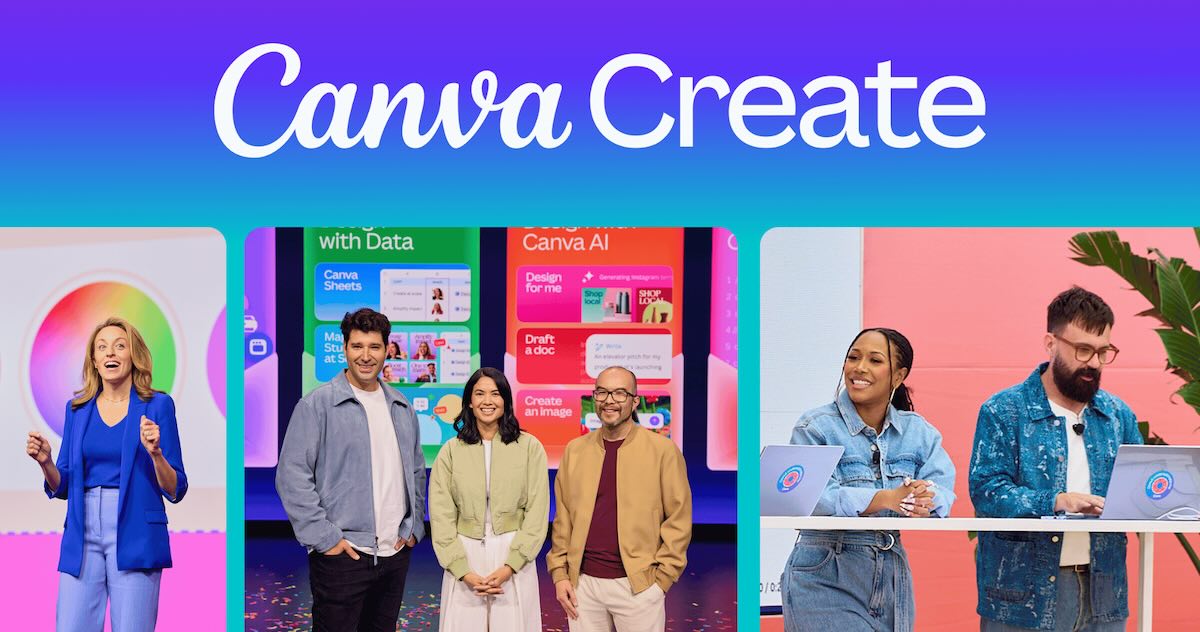
That was twelve years ago. I'm writing this from Los Angeles, where I've just watched Canva take the stage at Canva Create 2026.
The same mission. A different mountain.
Here's what struck me today: Canva hasn't changed what it's doing. It has just found the next version of the same problem to solve.
In 2013, the barrier was design. Complex software, steep learning curves, tools built for professionals that left everyone else behind. Canva dismantled that barrier so completely that 260 million people now use the platform every month without thinking twice about it.
In 2026, the barrier is AI. The technology is extraordinary. The potential is real. And for most people, it's still completely inaccessible, locked behind configuration files, prompt engineering, and technical knowledge that the vast majority of the world doesn't have and shouldn't need.
Today, Canva announced it's tearing that barrier down too.
What launched today isn't Canva with AI features bolted on. It's an AI platform that does design - a fundamental repositioning that's been years in the making. Canva's AI tools are already the third most used in the world, behind only OpenAI and Google. That's 24 billion interactions on the platform, and a signal that the same flywheel that built Canva's design business is spinning again. But faster.
What makes today's announcement technically significant, which I think is underreported, is what kind of AI platform Canva has built. Most AI design tools generate a flat image. If you want to change the headline or adapt it for a different format, you start over. What Canva ships is a fully layered, editable design document. The AI agent works on specific elements. It knows what you've already done and accounts for it when you give it the next instruction. You can prompt and edit side by side, in the same environment, without losing anything.
That's not a feature. That's a different category of product and it's only possible because Canva built its AI infrastructure from the ground up. Its own foundational models. Its own agentic platform. Memory, connectors, deep research, all native. This isn't a company that woke up to AI in 2023 and started integrating APIs. This is a company that saw where things were going years before most, invested accordingly, and is now pulling away.
What this means for founders
The lesson I keep coming back to is that the most durable companies aren't built around products. They're built around missions.
Products get disrupted. Markets shift. The technology stack that defines an industry in one decade becomes the legacy system to be replaced in the next.
But a mission - a genuine, specific, founder-held belief about what the world should look like - that's a different kind of asset. It steers. It generates new products as old ones mature. It tells you which mountain to climb next.
Mel has always known what she's trying to do. Make creation accessible. Remove the barrier between an idea and its expression. First in design. Now in AI. And while the technology changed, the mission didn't.
As a VC, we think long-term. Decades, not days. And the honest thing to say, watching today's announcements unfold, is that this feels like the beginning of Canva's second act. A company that has dismantled the barrier to design, and is now dismantling the barrier to AI.


More Stories


.avif)